Fatty Liver Disease Treatment in Bangalore
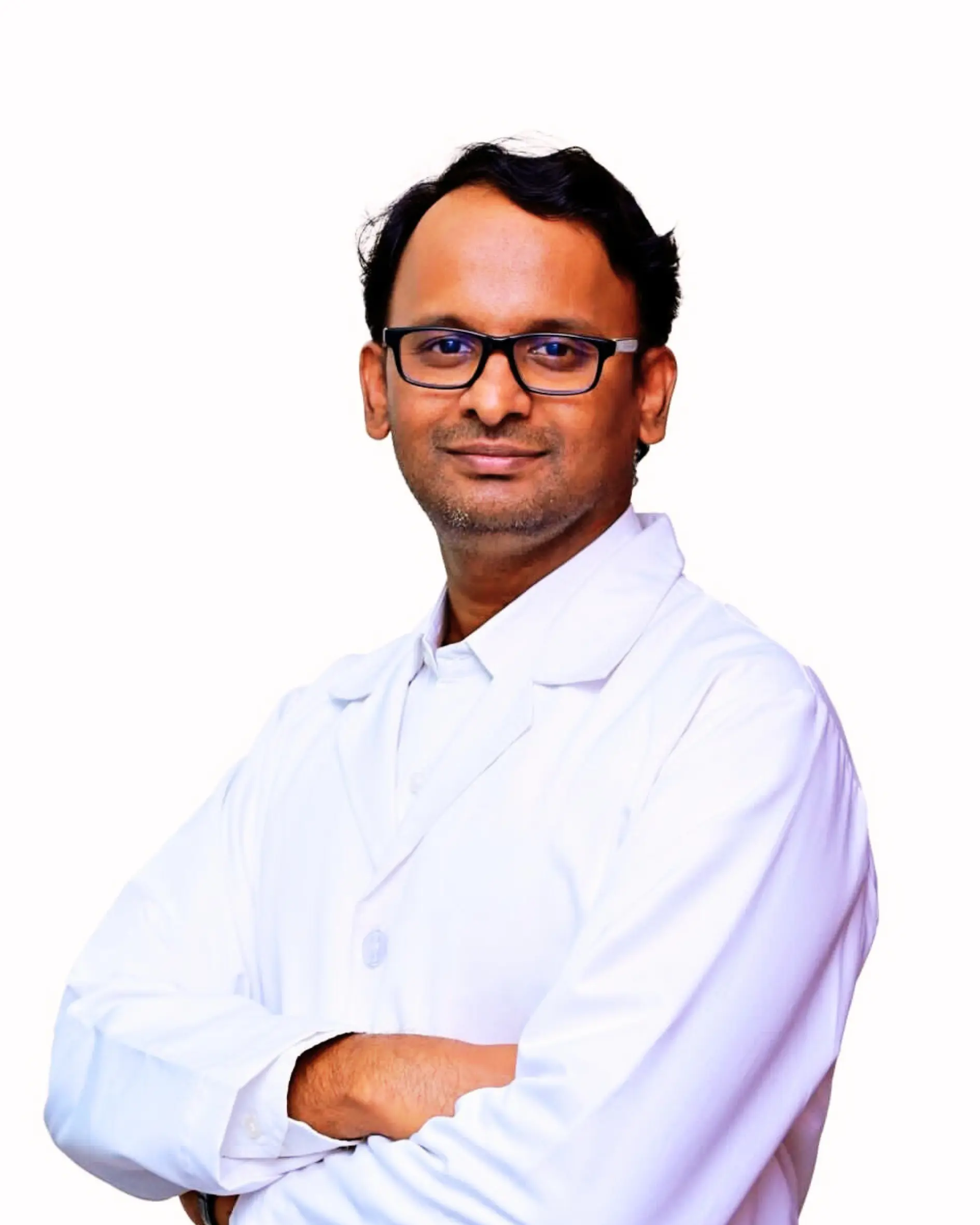
Expert diagnosis and management by Dr. Srinivas Bojanapu | Hepatologist & Liver Transplant Surgeon, Bangalore
Dr. Srinivas Bojanapu, Hepatologist and Liver Transplant Surgeon at Dhaara Liver Clinic, Bangalore, treats Fatty Liver Disease (NAFLD/NASH) with 16+ years of specialist experience. With a team performing 60+ liver transplants per year, Dr. Bojanapu offers both medical and surgical management including robotic and laparoscopic techniques.
What is Fatty Liver Disease (NAFLD/NASH)
Fatty Liver Disease is a condition where too much fat builds up in the liver. It is one of the most common liver diseases worldwide, and it can be divided into two main types: Non-Alcoholic Fatty Liver Disease (NAFLD) and Non-Alcoholic Steatohepatitis (NASH).
- NAFLD is the milder form and usually doesn’t cause serious damage to the liver.
- NASH is a more severe type where the liver becomes inflamed, leading to scarring over time. This can eventually lead to liver failure, liver cancer, or the need for a liver transplant.
In India, with changing lifestyles and rising rates of obesity and diabetes, Fatty Liver Disease is becoming increasingly common. Dr. Srinivas Bojanapu, a renowned Hepatologist and Liver Transplant Surgeon in Bangalore, India, has seen a steady rise in patients with NAFLD and NASH in recent years.
Causes and Risk Factors
Fatty Liver Disease doesn’t just happen out of the blue. It usually develops due to a combination of lifestyle and health factors. Here are the most common causes and risk factors:
- Obesity – Especially central obesity (fat around the waist) is a major risk factor.
- Type 2 Diabetes – High blood sugar levels can contribute to fat buildup in the liver.
- High cholesterol and triglycerides – These are types of fats in the blood that, when too high, can increase the risk of NAFLD.
- High blood pressure – This is often linked to heart and liver health.
- Insulin resistance – This is a condition where the body doesn’t use insulin effectively, which is closely tied to diabetes and obesity.
- Sedentary lifestyle – Lack of physical activity can lead to weight gain and other risk factors.
- Poor diet – Eating too much sugar, processed food, and unhealthy fats can worsen the condition.
- Genetics – Some people are more likely to develop NAFLD due to inherited traits.
- Age and gender – Men are more likely to develop NAFLD than women, but after menopause, women are at higher risk.
In Bangalore, where lifestyle changes and urban living are the norm, these factors are becoming more common. Dr. Bojanapu often sees patients from all walks of life, including busy professionals and families, who are affected by this condition.
Symptoms and Warning Signs
One of the most frustrating things about Fatty Liver Disease is that it often doesn’t cause symptoms in the early stages. This means many people don’t realize they have it until it has already caused some damage.
However, in the later stages or in more severe cases like NASH, symptoms may include:
- Fatigue – Feeling unusually tired, even after rest.
- Weight loss – Unintended weight loss can be a sign of advanced liver disease.
- Abdominal discomfort – Especially in the upper right side of the abdomen, where the liver is located.
- Swelling in the legs and abdomen – This can be a sign of liver failure.
- Jaundice – Yellowing of the skin and eyes, which happens when the liver can’t process bilirubin properly.
- Confusion or difficulty thinking clearly – In severe cases, this can be a sign of hepatic encephalopathy, a brain disorder caused by liver failure.
It’s important to note that many people with NAFLD or NASH may not have any symptoms at all. That’s why regular check-ups and early detection are so important, especially for those with known risk factors.
How is it Diagnosed
Diagnosing Fatty Liver Disease often starts with a simple blood test called a liver function test. This can show whether the liver is inflamed or damaged.
If the blood test suggests a problem, further tests may be needed:
- Ultrasound – This is a painless imaging test that can show fat in the liver.
- FibroScan – This is a newer, non-invasive test that measures the amount of fat and scarring in the liver.
- MRI or CT scan – These can give detailed images of the liver.
- Liver biopsy – In some cases, a small sample of liver tissue is taken and examined under a microscope. This is the most accurate way to diagnose NASH and determine the extent of liver damage.
Dr. Srinivas Bojanapu and his team in Bangalore use a combination of these tests to make an accurate diagnosis and develop a treatment plan tailored to each patient’s needs.
Treatment Options
The good news is that Fatty Liver Disease can often be managed and even reversed with lifestyle changes and, in some cases, medical treatment.
Lifestyle Changes
- Losing weight – Even a small weight loss of 5-10% can significantly improve the condition.
- Exercise regularly – Aim for at least 30 minutes of physical activity most days of the week.
- Eating a healthy diet – Focus on whole foods, fruits, vegetables, lean proteins, and healthy fats. Avoid sugary drinks and processed foods.
- Avoiding alcohol – Even small amounts of alcohol can worsen liver damage.
- Managing other health conditions – Controlling diabetes, high blood pressure, and high cholesterol is essential.
Medical Treatments
In more advanced cases, especially NASH, doctors may prescribe medications to:
- Lower cholesterol and triglycerides
- Improve insulin sensitivity
- Reduce liver inflammation and scarring
Dr. Bojanapu is well-versed in the latest medical treatments for NAFLD and NASH and often collaborates with endocrinologists and dietitians to provide comprehensive care.
Weight Loss Surgery
In cases where obesity is a major contributing factor and lifestyle changes are not enough, weight loss surgery may be considered. This is usually reserved for patients with a body mass index (BMI) of 40 or higher, or 35 with other serious health conditions.
When is Liver Transplant Needed
In most cases, Fatty Liver Disease can be managed with lifestyle changes and medical care. However, in severe cases of NASH, when the liver has been severely damaged and is no longer functioning properly, a liver transplant may be the only option.
Liver transplant is a major surgery, but it can be life-saving. It is usually considered when:
- Liver failure is imminent or has already occurred.
- Severe scarring (cirrhosis) has developed.
- Complications like liver cancer or bleeding from the esophagus are present.
- Other treatments have failed and the liver damage is irreversible.
Dr. Srinivas Bojanapu, one of the leading liver transplant surgeons in Bangalore, performs liver transplants with high success rates. He works closely with a team of specialists to ensure that patients are evaluated thoroughly before considering a transplant.
It’s important to know that liver transplants are not a cure for Fatty Liver Disease. They are a treatment for the end stage of the disease. That’s why early diagnosis and treatment are so important to prevent the condition from progressing to the point where a transplant is needed.
Conclusion
Fatty Liver Disease (NAFLD/NASH) is a growing concern in India, especially in cities like Bangalore, where lifestyle changes and urban living are the norm. However, with early detection, lifestyle modifications, and medical care, many people can manage this condition effectively.
If you or a loved one is experiencing symptoms or has risk factors for Fatty Liver Disease, it’s important to seek help from a specialist like Dr. Srinivas Bojanapu, who has extensive experience in liver disease treatment and liver transplantation in Bangalore, India.
Remember, the key to managing Fatty Liver Disease is early intervention and a commitment to a healthier lifestyle. With the right care and support, many people can lead long and healthy lives.
Why Choose Dr. Srinivas Bojanapu?
Book a Consultation with Dr. Srinivas Bojanapu
Hepatologist & Liver Transplant Surgeon, Bangalore
MBBS, MS, FACRSI, DrNB, PDF (RGUHS) · 16+ years · 60+ transplants/year
Dhaara Liver Clinic, Yelahanka · Kauvery Hospital EC & Marathahalli · Kuppam · Hospet · Shimoga
Dhaara Liver Clinic, Yelahanka · Kauvery Hospital EC & Marathahalli · Kuppam · Hospet · Shimoga
Frequently Asked Questions
Can fatty liver be reversed?
Yes, fatty liver disease can often be reversed through lifestyle changes such as weight loss, a healthy diet, and regular exercise. Losing even 5-10% of body weight can significantly improve liver health and reduce fat accumulation.
Is this condition fatal?
Fatty liver disease itself is not usually fatal, but if left untreated, it can progress to more severe conditions like cirrhosis or liver failure. Managing the disease through lifestyle and medical care can greatly reduce these risks.
Can I still drink alcohol if I have fatty liver?
It is generally recommended to avoid alcohol if you have fatty liver disease, as alcohol can worsen liver damage and increase the risk of developing more serious liver conditions. Even small amounts can be harmful over time.
How is fatty liver diagnosed?
Fatty liver disease is often diagnosed through blood tests, imaging tests like ultrasound or MRI, and sometimes a liver biopsy. Symptoms may not be present in early stages, so regular check-ups are important, especially for those at risk.
Can children get fatty liver disease?
Yes, children can develop fatty liver disease, often due to obesity, poor diet, or other metabolic conditions. Early detection and lifestyle changes are crucial to prevent long-term liver damage in children.