Liver Cancer (HCC) Treatment in Bangalore
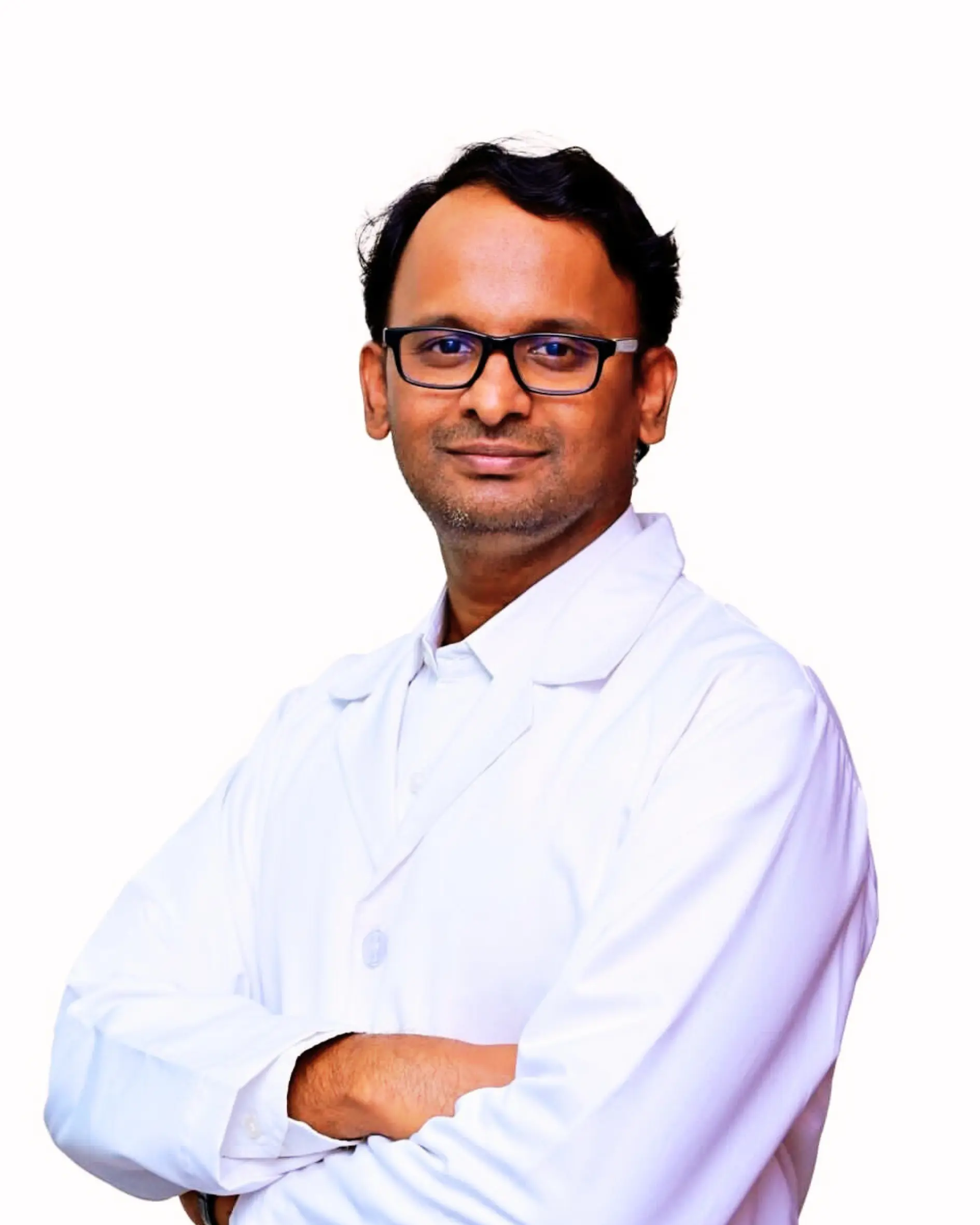
Expert diagnosis and management by Dr. Srinivas Bojanapu | Hepatologist & Liver Transplant Surgeon, Bangalore
Dr. Srinivas Bojanapu, Hepatologist and Liver Transplant Surgeon at Dhaara Liver Clinic, Bangalore, treats Liver Cancer (Hepatocellular Carcinoma / HCC) with 16+ years of specialist experience. With a team performing 60+ liver transplants per year, Dr. Bojanapu offers both medical and surgical management including robotic and laparoscopic techniques.
What is Liver Cancer (Hepatocellular Carcinoma / HCC)
Liver cancer is a type of cancer that starts in the liver, which is one of the most important organs in the body. The liver helps to filter blood, remove toxins, and store energy. When cancer develops in the liver, it is often called Hepatocellular Carcinoma (HCC), which is the most common type of liver cancer.
HCC usually starts in the hepatocytes, which are the main type of liver cells. This cancer is more common in people who already have liver damage, such as from chronic liver disease or cirrhosis. In India, liver cancer is a growing public health concern, and early detection is key to improving outcomes.
Dr. Srinivas Bojanapu, a leading Hepatologist and Liver Transplant Surgeon in Bangalore, India, has extensive experience in diagnosing and treating liver cancer. He emphasizes the importance of understanding the causes, symptoms, and treatment options for HCC, especially in a country where liver diseases are often linked to lifestyle, infections, and environmental factors.
—
Causes and Risk Factors
Liver cancer doesn’t happen by chance. It often develops due to long-term damage to the liver. Here are the most common causes and risk factors:
- Chronic Hepatitis B or C infection: These viral infections can cause long-term liver damage and increase the risk of developing HCC.
- Cirrhosis: Scarring of the liver from conditions like alcohol abuse, fatty liver disease, or autoimmune hepatitis is a major risk factor.
- Fatty liver disease (Non-alcoholic Fatty Liver Disease or NAFLD): This is becoming more common in India due to changing lifestyles and increased obesity.
- Excessive alcohol consumption: Long-term heavy drinking can lead to cirrhosis and increase the risk of liver cancer.
- Diabetes: People with uncontrolled diabetes are more likely to develop liver cancer.
- Aflatoxin exposure: A toxic substance produced by certain molds found in contaminated food, especially in parts of India, can increase the risk of HCC.
- Genetic conditions: Some rare inherited diseases, such as hemochromatosis or Wilson’s disease, can lead to liver damage and increase the risk of cancer.
Dr. Bojanapu often sees patients from Bangalore and across South India who have developed HCC due to fatty liver disease or Hepatitis B. He recommends regular screening for people with known risk factors, especially those with chronic liver disease.
—
Symptoms and Warning Signs
In the early stages, liver cancer may not cause any symptoms. However, as the cancer grows, the following signs may appear:
- Unexplained weight loss: Losing weight without trying is a common warning sign.
- Loss of appetite: Feeling full quickly or not wanting to eat is a red flag.
- Abdominal pain: Especially in the upper right side of the abdomen, near the liver.
- Swelling in the abdomen: This can be due to fluid buildup in the abdominal cavity.
- Yellowing of the skin and eyes (jaundice): This happens when the liver can’t process bilirubin properly.
- Fatigue and weakness: Feeling unusually tired is common in people with advanced liver disease.
- Nausea and vomiting: These may occur as the liver function declines.
- Enlarged liver or spleen: This can be felt during a physical exam.
It’s important to note that many of these symptoms are also seen in advanced liver disease, such as cirrhosis. That’s why regular check-ups and early screening are crucial for people at higher risk.
—
How is it Diagnosed
Early diagnosis is the best way to treat liver cancer. If you have risk factors, your doctor may recommend regular screening tests. The following are commonly used to diagnose HCC:
Blood Tests
- Alpha-fetoprotein (AFP) test: This is a blood test that can detect a protein that may be elevated in people with liver cancer.
- Liver function tests: These tests check how well the liver is working and can indicate damage or disease.
Imaging Tests
- Ultrasound: A painless test that uses sound waves to create images of the liver.
- CT scan (Computed Tomography): This uses X-rays and computers to create detailed images of the liver.
- MRI (Magnetic Resonance Imaging): Uses magnets and radio waves to produce images of the liver and surrounding organs.
- Contrast-enhanced imaging: Sometimes, contrast dye is used to make tumors more visible.
Liver Biopsy
In some cases, a needle biopsy may be performed to take a small sample of liver tissue for examination under a microscope. This is usually done if the diagnosis is unclear.
Dr. Bojanapu and his team at Bangalore use advanced imaging technology and expert pathology to ensure accurate diagnosis. He often sees patients who are diagnosed at an early stage due to regular follow-up with their doctors.
—
Treatment Options
Treatment for HCC depends on several factors, including the stage of the cancer, the patient’s overall health, and the extent of liver damage. The goal of treatment is to remove the cancer, prevent it from spreading, and improve quality of life.
1. Surgery
- Liver resection: If the cancer is small and confined to one area of the liver, a part of the liver may be removed.
- Liver transplant: In some cases, especially when the cancer is small and the patient has cirrhosis, a liver transplant may be the best option. This is a major procedure and is only considered when the cancer is in an early stage and the patient is a good candidate for surgery.
2. Ablation Therapy
- Radiofrequency ablation (RFA): Uses heat to destroy cancer cells.
- Microwave ablation: Uses microwave energy to kill cancer cells.
- Cryoablation: Uses extreme cold to destroy cancer cells.
These are minimally invasive procedures and are often used for small tumors.
3. Embolization
- Transarterial chemoembolization (TACE): This treatment involves delivering chemotherapy directly to the tumor through the blood vessels, blocking the blood supply to the cancer.
4. Radiation Therapy
- Radiotherapy may be used to shrink tumors and relieve symptoms in advanced cases.
5. Targeted Therapy and Immunotherapy
- Targeted drugs attack specific parts of cancer cells and can be used when the cancer has spread.
- Immunotherapy helps the body’s immune system fight cancer.
6. Supportive Care
- For people with advanced liver cancer, treatment may focus on managing symptoms and improving comfort.
Dr. Bojanapu is known for his personalized approach to treatment. He often combines surgery, ablation, and advanced therapies to give patients the best chance of recovery. In Bangalore, patients have access to state-of-the-art facilities and expert care from one of the leading liver transplant surgeons in India.
—
When is Liver Transplant Needed
A liver transplant is a major treatment option for some patients with Hepatocellular Carcinoma (HCC). It is considered when:
- The cancer is small (usually less than 5 cm) and confined to the liver.
- The patient has cirrhosis (scarring of the liver), which is a common cause of HCC.
- The cancer has not spread to other parts of the body.
- The patient is otherwise healthy and can tolerate the surgery.
Liver transplant is a life-saving option for patients who meet these criteria. However, it’s not suitable for everyone, and the decision is based on strict guidelines that consider the size and number of tumors, liver function, and overall health.
In Bangalore, Dr. Srinivas Bojanapu and his team have performed numerous successful liver transplants for patients with HCC. He works closely with transplant coordinators, pathologists, and other specialists to ensure that patients are evaluated thoroughly before considering a transplant.
Liver transplant is also a long-term solution, as it replaces the damaged liver with a healthy one. However, it requires lifelong follow-up and anti-rejection medications to prevent the body from rejecting the new liver.
—
Conclusion
Liver cancer, or Hepatocellular Carcinoma (HCC), is a serious but treatable disease, especially when caught early. Understanding the risk factors, symptoms, and treatment options is essential for patients and their families.
Dr. Srinivas Bojanapu, a renowned hepatologist and liver transplant surgeon in Bangalore, India, is dedicated to providing compassionate, expert care to patients with liver cancer. He uses advanced diagnostic tools, personalized treatment plans, and state-of-the-art surgical techniques to help patients live longer and healthier lives.
If you or a loved one is at risk for liver cancer, it’s important to see a specialist early and follow a regular screening schedule. In Bangalore and across India, patients have access to world-class care from experts like Dr. Bojanapu who are committed to improving outcomes and saving lives.
Why Choose Dr. Srinivas Bojanapu?
Book a Consultation with Dr. Srinivas Bojanapu
Hepatologist & Liver Transplant Surgeon, Bangalore
MBBS, MS, FACRSI, DrNB, PDF (RGUHS) · 16+ years · 60+ transplants/year
Dhaara Liver Clinic, Yelahanka · Kauvery Hospital EC & Marathahalli · Kuppam · Hospet · Shimoga
Dhaara Liver Clinic, Yelahanka · Kauvery Hospital EC & Marathahalli · Kuppam · Hospet · Shimoga
Frequently Asked Questions
Can fatty liver be reversed?
Yes, fatty liver can often be reversed through lifestyle changes such as weight loss, a healthy diet, and regular exercise. Avoiding alcohol and managing conditions like diabetes can also help improve liver health.
Is this condition fatal?
Hepatocellular carcinoma can be fatal if not treated early, but with timely diagnosis and appropriate treatment, many patients can live for years. Survival rates depend on the stage of the cancer and overall health.
What are the early signs of liver cancer?
Early signs of liver cancer may include unexplained weight loss, abdominal pain, fatigue, and swelling in the abdomen. However, many people do not experience symptoms in the early stages.
Can I still drink alcohol if I have liver cancer?
It is generally not recommended to drink alcohol if you have liver cancer, as it can worsen liver damage and interfere with treatment. Your doctor may advise complete abstinence from alcohol.
Is there a cure for liver cancer?
While liver cancer can sometimes be cured with surgery or other treatments, especially if caught early, it is often treated with the goal of controlling the disease and improving quality of life. Treatment options depend on the stage and overall health of the patient.